
Understanding What Settling In Really Means: Every Child Has Their Own Journey

When we talk about children settling into nursery, preschool or a childminding setting, it can be tempting to think of settling in as a relatively straightforward process. A child arrives, becomes familiar with the environment, develops relationships with the adults around them and, eventually, we reach the point where we can say, "They're settled now."
But what does that actually mean?
Does it mean a child no longer cries when their parent leaves? Does it mean they confidently walk through the door each morning? Perhaps it means they are beginning to join in with activities, play alongside other children or explore the environment independently.
All of these can be positive signs, but I think there is a danger in viewing them as a definitive measure of whether a child has settled. After more than 20 years working in Early Years, I have seen children settle in all sorts of different ways. I have seen children walk through the door on their first day and begin exploring almost immediately. I have seen children who have needed several weeks before they felt comfortable enough to really engage with their surroundings, and I have seen children who have taken considerably longer than that. I have also seen children who appeared to settle very quickly, only to become unsettled again further down the line.
These experiences have taught me something that I think is incredibly important when we are supporting children through transitions:
No two settling-in processes are the same.
There is no magic number of days after which a child should be considered settled. There is no universal timetable that every child should follow, and there is certainly no reason why we should expect children who are entering the same setting at the same time to respond to the experience in the same way.
Settling in is an individual journey, shaped by the child's previous experiences, relationships, temperament, circumstances and understanding of what is happening around them.
Perhaps, therefore, our first job as practitioners is to reconsider what we actually mean when we use the word settled.

What Does It Mean for a Child to Be Settled?
This is more complicated than it might initially appear.
A child who happily separates from their parent may appear to have settled quickly, but that does not necessarily tell us everything about how they are feeling. Equally, a child who becomes upset at the point of separation may be experiencing a perfectly healthy and understandable response to a significant change in their life.
This is why I think it is important that we look beyond the most obvious behaviours.
A child may be quiet because they are beginning to feel comfortable, or they may be quiet because they are still trying to work out what is happening around them. A child may be busy and involved in activities because they feel confident and secure, but another child might throw themselves into play because keeping busy is their way of managing an unfamiliar situation. We cannot always know what a behaviour means simply by looking at it.
This is where observation becomes so important.
Rather than asking whether a child is "settled", we can begin to look for the smaller signs that a relationship is developing and that emotional security is beginning to grow. Are they beginning to seek out a particular practitioner when they need reassurance? Are they becoming more comfortable communicating their needs? Are they starting to explore further away from the adult who has provided them with security? Are they beginning to show us their interests and personality?
These changes may be subtle, particularly during the early weeks, but they can tell us far more about a child's experience than whether they cried when their parent left.
For me, settling in is closely connected to a child's growing sense of emotional security. When children begin to trust the adults around them and understand that they are safe, they can gradually devote more of their energy to exploring, playing, communicating and learning.
That process cannot be rushed.
Every Child Arrives With Their Own Story
One of the things I have come to appreciate most throughout my career is that we never truly know what a child is bringing with them when they walk through the door.
We may have information from parents and carers. We may know about their interests, routines and previous experiences. We may have met them during a settling-in visit and begun to build a relationship. All of this is valuable, but we are still meeting a unique individual whose experience of this transition belongs entirely to them.
Some children thrive on novelty. They enjoy exploring new places, meeting new people and discovering what is around the next corner. Others prefer to watch and observe before deciding whether they feel comfortable enough to become involved. Some children have experienced previous transitions that have helped them develop confidence, whilst others may have had very few experiences of being separated from their family.
Even children from the same family can respond very differently to the same experience.
This is why comparisons are rarely helpful.
A child who walks confidently into the room on their first day has not necessarily had a more successful transition than the child who spends several weeks staying close to their key person. They are simply experiencing the transition differently.
I have seen children who appear incredibly confident at first and then become unsettled once the novelty of starting somewhere new has disappeared. I have also seen children who initially seem very unsure gradually develop an enormous sense of confidence once they have had time to understand the environment and build trusting relationships.
There is no right or wrong way to settle.
There is simply the way that each individual child experiences it.

Settling In Isn't Always a Straight Line
Perhaps one of the most important things for practitioners and families to understand is that settling in is not necessarily a linear process.
We can sometimes assume that once a child has reached a point where they are happily entering the setting, they will continue to do so. Yet children's emotional wellbeing can change from one day to the next, just as ours can.
A child may have been completely comfortable for several weeks before suddenly becoming upset at drop-off. They may begin asking their parent not to leave or start seeking more reassurance from their key person. It can be tempting to view this as a step backwards, particularly if we have already described the child as "settled".
But perhaps it isn't a step backwards at all.
Children experience changes in their lives that we may not always be aware of. There may be something happening at home, a change in routine, tiredness, a new sibling, a family event or simply a difficult day. Sometimes there may be no obvious explanation. What matters is that we respond to what the child is communicating rather than becoming concerned that they have somehow lost the progress they had made.
I think this is one of the reasons why the language we use matters.
If we describe settling in as something that has been completed, then any later uncertainty can feel like a failure. If we instead see it as an ongoing process of building emotional security, then we can accept that children may need different levels of support at different times.
Sometimes a child who has been confidently exploring for months will suddenly want to sit beside their key person again.
That is okay.
Sometimes a child who has happily separated from their parent for weeks will suddenly find goodbye difficult.
That is okay too.
Children don't always need us to encourage them to move forward. Sometimes they simply need to know that the secure relationship they have built is still there when they need it.

Looking Beyond the Tears
Crying is perhaps one of the behaviours most closely associated with settling in. Parents understandably want to know whether their child cried when they left, and practitioners often use a child's response at drop-off as one indicator of how they are managing the transition.
There is nothing wrong with noticing this. However, I think we need to be careful about making the absence of tears the definition of successful settling.
Crying is communication.
A child who cries when their parent leaves may be communicating that they are finding the separation difficult. They may be expressing sadness, uncertainty or a need for reassurance. Our role isn't simply to stop the crying as quickly as possible. It is to help the child experience those emotions within the safety of a supportive relationship.
This is an important distinction.
We want children to feel comfortable and happy in our settings, but we don't want to communicate that difficult emotions are something they should hide or overcome as quickly as possible. If a child is upset, we can acknowledge that feeling whilst reassuring them that they are safe and that their parent will return.
Over time, these experiences can help children develop their own confidence around separation. They begin to learn that although saying goodbye can feel difficult, they are not alone in managing those feelings.
That is a much more meaningful outcome than simply achieving a tear-free drop-off.
The Child Who Watches From the Side
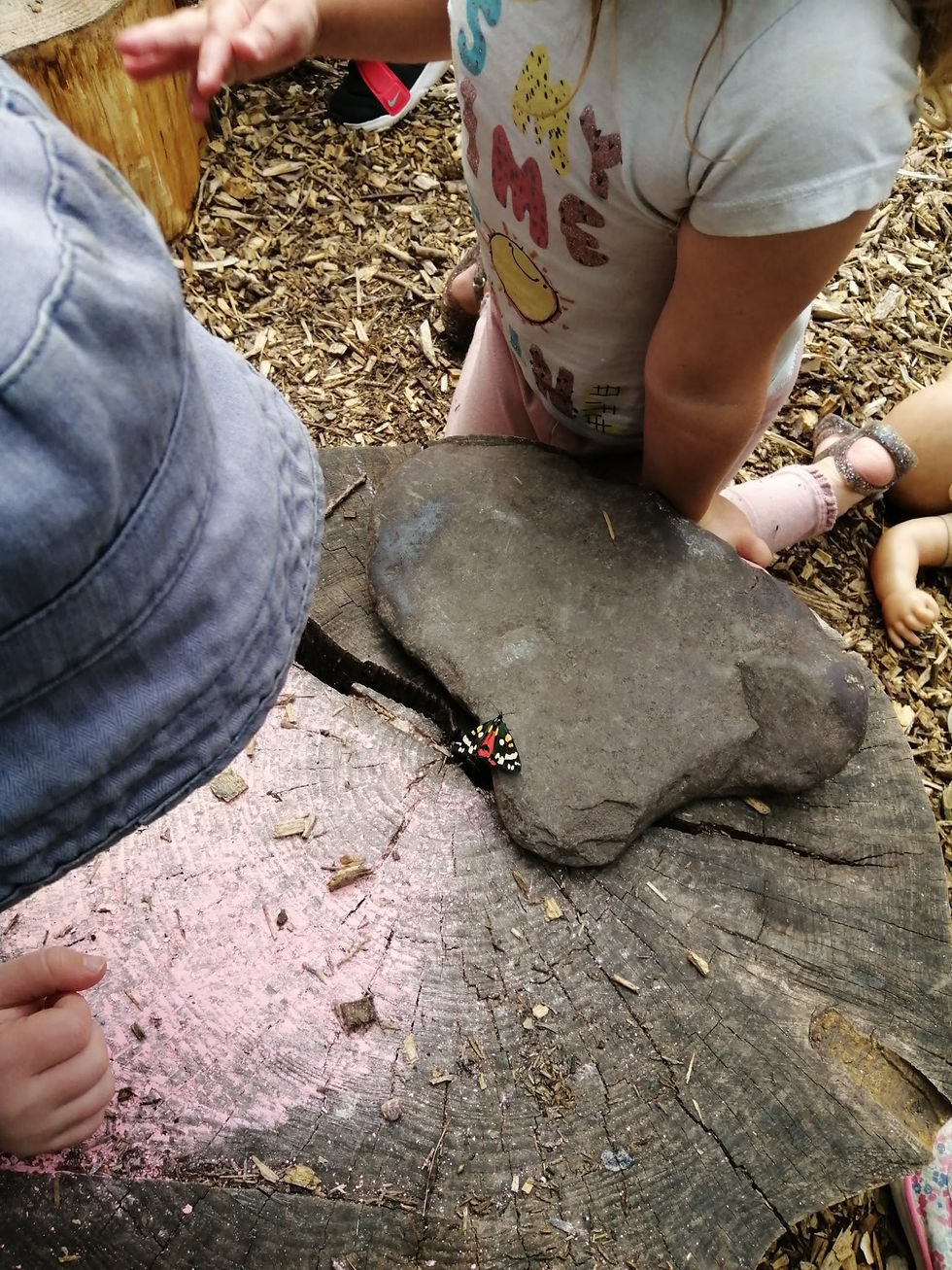
There is another group of children who can sometimes be overlooked during the settling-in period: those who are not visibly distressed but are not yet ready to join in either.
They may spend considerable amounts of time watching other children play. They may remain close to their key person or choose the same quiet area of the room each day. They may appear to be doing very little.
It can be tempting to encourage these children to become involved.
"Come and see what we're doing."
"Would you like to join us?"
"Come and have a go."
Sometimes that is exactly what they need. But sometimes, simply being given the time and space to observe is a much more supportive response.
Children are constantly taking in information. They are watching how other children interact, listening to conversations, learning where resources are kept and beginning to understand the rhythms and routines of the day. Observation can be an important part of becoming familiar with an unfamiliar environment.
Rather than viewing a child who is watching as a child who isn't engaging, we might ask ourselves what they are learning through their observations.
Perhaps they are building an understanding of the environment before they are ready to participate in it.
A warm smile, a quiet acknowledgement or simply an adult being available nearby can sometimes provide all the reassurance they need.

Why Comparing Children Doesn't Help
September can be a difficult time for comparison.
Practitioners naturally notice the differences between children. One child may be confidently exploring whilst another remains close to their parent. One may happily join group activities whilst another prefers to watch. One may quickly form friendships whilst another needs much longer to develop those connections.
It can be easy to see these differences and begin to wonder whether one child is "doing better" than another.
I don't think this is helpful.
The child who is confidently exploring isn't necessarily more settled than the child who is quietly observing. They may simply have different needs at that particular moment.
Instead of comparing children with one another, I think it is much more useful to compare a child with themselves.
What can they do today that they couldn't do last week?
Have they begun to seek out their key person when they need reassurance?
Are they exploring a little further?
Are they communicating more openly?
Have they started to share an interest with another child?
Are we beginning to see glimpses of their personality that weren't there before?
These small changes can be easy to overlook, particularly when we are busy with the demands of a new term. Yet they are often the moments that tell us the most about a child's developing sense of security.
A child who spent their first week standing quietly beside their parent and is now taking a few tentative steps into the room has made progress. It may not look dramatic from the outside, but for that child it may represent an enormous achievement.
So, How Do We Know When a Child Is Settled?
Perhaps the answer is that we cannot always know.
We can observe. We can listen. We can talk to families. We can notice patterns in children's behaviour and consider what they might be communicating. We can build strong relationships and create environments that support emotional security.
But there isn't a single moment when a practitioner can confidently say that a child has reached the end of their settling-in journey.
Instead, there are signs that trust is developing.
A child begins to seek you out.
They show you something they have made.
They bring you a book they want you to read.
They tell you about something that happened at home.
They become comfortable enough to disagree with you.
They laugh freely.
They begin to explore because they know you are nearby.
They start to bring more of themselves into the setting.
These are the moments I would pay attention to.
Because perhaps being settled isn't really about whether a child can walk through the door without becoming upset. Perhaps it is about whether they feel secure enough to be themselves once they are through it.
That brings us back to the central message from the first article in this series.
Belonging comes before learning.
And belonging takes time.
We cannot prescribe how long that process should take for an individual child. What we can do is make sure that, however long it takes, they are surrounded by adults who are patient, responsive and genuinely interested in helping them find their place.
After more than 20 years in Early Years, I have seen children settle in almost immediately, children who have needed weeks or months and children who have become unsettled again after appearing completely comfortable. Those experiences have reinforced for me that there is no single definition of successful settling.
Our role is not to make every child follow the same journey.
It is to understand the journey each child is taking and to provide the relationships, reassurance and time they need along the way.
🍃 Take a Moment to Reflect
Think about the children who have joined your setting over the years.
Can you remember a child who settled almost immediately? Can you remember another who needed considerably longer? Perhaps you can remember a child who appeared to have settled beautifully before becoming unsettled again.
How did you respond to each of those children?
Did you expect them to follow the same journey, or were you able to step back and understand what each individual child was communicating?
Perhaps the most useful question isn't "How long should this child take to settle?" but rather, "What can I do today to help this child feel a little more secure?"
Looking for Practical September Planning?
If you're preparing to welcome new children into your setting this September, my September All About Me Complete EYFS Planning & Provision Toolkit has been created to help practitioners get to know the children behind the names, celebrate their individuality and use their interests and experiences as a starting point for building meaningful relationships.
The toolkit provides four weeks of purposeful EYFS planning and provision ideas designed to support those important first weeks, whilst giving practitioners opportunities to discover what makes each child unique.
Explore the toolkit here:
Part of the Early Insights September Series: Building Belonging in the Early Years
This article is part of a series exploring how we can create positive transitions and meaningful beginnings for every child.
The series includes:
Helping Children Settle into Nursery: Why Belonging Comes Before Learning
Understanding What Settling In Really Means (You're reading this article.)
Why Relationships Are the Foundation of Successful Transitions
Working in Partnership with Families During September
Creating Environments That Communicate Belonging
Practical Ways to Help Children Settle
Seven Common Settling-In Mistakes Practitioners Make
Reflecting on September: What Have We Learnt About Our Children?
Links to the other articles will be added as they are published.


Comments