
Helping Children Settle into Nursery: Why Belonging Comes Before Learning

Updated: Aug 9
5 minute read
📖 In this article you'll discover:
✓ Why belonging comes before learning.
✓ Why settling in isn't a timetable.
✓ How relationships shape successful transitions.
Starting nursery, preschool or with a childminder is one of the biggest transitions in a young child's life. Whilst September is often associated with new routines and exciting learning opportunities, the first priority should always be helping children feel safe, secure and that they belong. In this article, I explore why relationships are the true foundation of successful transitions and how practitioners can create an environment where every child feels valued from the very beginning.
Every September, settings across the country prepare to welcome a new group of children. Environments are organised, resources are refreshed, displays are updated and practitioners carefully consider how best to introduce routines and expectations. It is a time filled with optimism, anticipation and excitement. There is something special about the beginning of a new academic year, bringing opportunities to build new relationships and support children as they take their next steps in learning.
Yet, amidst all the preparation, I sometimes wonder whether we become so focused on getting everything ready that we overlook one of the most important questions of all.

What does September actually feel like from a child's perspective?
For many children, starting nursery, preschool or with a childminder is one of the biggest transitions they have experienced. They are entering an unfamiliar environment, surrounded by adults they have never met and children they do not yet know. The routines are different, the sounds are unfamiliar and, perhaps most significantly, they are learning to separate from the people who have always provided comfort and security.
Whilst adults often view September as the beginning of a new educational journey, children are rarely thinking about learning goals, observations or curriculum planning. Their priorities are much simpler and much more fundamental.
They want to know whether they are safe.
They want to know whether the adults around them can be trusted.
They want to know whether their family will return.
Most importantly, they want to know whether they belong.

These questions are rarely spoken aloud, yet they are communicated every day through children's behaviour. Some children confidently explore their new environment within minutes, while others prefer to stand quietly beside a parent, carefully observing everything around them before taking those first tentative steps. Some become upset when their parent leaves, while others appear completely settled, only for emotions to emerge several days or even weeks later.
All of these responses are entirely normal. Settling into a new environment is not a process that follows a timetable, nor is it something that can be measured by how quickly a child separates from their parent. Every child arrives with their own experiences, personality, temperament and previous relationships, all of which influence how they respond to change.
Over the years, I have often heard practitioners describe children as either "good settlers" or "poor settlers". Although these comments are always made with good intentions, I have become increasingly uncomfortable with this way of thinking. It suggests that there is a right way to settle, when in reality there is simply an individual way. A child who cries at drop-off is not settling badly, just as a child who walks confidently into the setting is not necessarily settling well. Children communicate their feelings in different ways, and it is our role as practitioners to understand what those behaviours are telling us rather than making assumptions about them.
This is why I believe that successful transitions are not built on routines alone. Whilst predictable routines undoubtedly help children understand what happens next, they are only one small part of the settling-in process. Long before children begin to engage fully with the carefully planned learning opportunities we have created, they need something much more important. They need relationships that help them feel emotionally secure.
As practitioners, we often speak about preparing children for nursery. However, I sometimes think we should turn that idea around. Perhaps our greatest responsibility is not preparing children for our setting, but preparing our setting to welcome every child as an individual. That means taking time to understand who they are, what brings them comfort, what excites them, what worries them and what helps them feel safe.
When children experience this sense of security, something remarkable begins to happen. Confidence gradually grows. Curiosity replaces uncertainty. Relationships begin to flourish, and learning develops naturally because children no longer need to devote all of their energy to wondering whether they are safe.
This understanding has shaped much of my own thinking over the years and is one of the reasons I believe September should never be viewed simply as the start of a new term. Instead, it should be seen as an opportunity to lay the foundations for everything that follows. The relationships established during those first few weeks often influence children's confidence, wellbeing and engagement for many months to come.
Perhaps this is why I have become increasingly cautious about using phrases such as "They're settled now." Settling in is not a destination that children eventually arrive at before moving on to the next stage of their learning journey. It is an ongoing process that is shaped by relationships, experiences and emotional security.
Children experience transitions in much the same way.
🍃 A Moment to Reflect
Before reading on, pause for a moment and think about the children who will be joining your setting this September.
Now imagine sitting down with each of them at the end of their very first month and asking one simple question:
"Did you feel that you belonged here?"
Not whether they learnt to recognise their name.
Not whether they joined in with every activity.
Not whether they stopped crying at drop-off.
Simply whether they felt that they were known, valued and cared for.
If every child could answer "Yes," then perhaps we have already achieved one of the most important outcomes of the entire year.
Think about your own experiences as an adult. Have you ever started a new job, moved house or joined a new organisation? You may have appeared confident on the outside whilst still wondering whether you truly fitted in. You may have questioned whether people accepted you, whether you were doing the right thing or whether you belonged. Those feelings rarely disappear overnight. Instead, they gradually lessen as relationships develop and familiarity grows.
A child who separates confidently from their parent during the first week may become unsettled a fortnight later as the novelty begins to wear off. Another child may quietly observe from the sidelines throughout September before suddenly flourishing in October, once they have built trusting relationships with the adults around them. Neither child is settling better than the other. They are simply following their own individual journey.
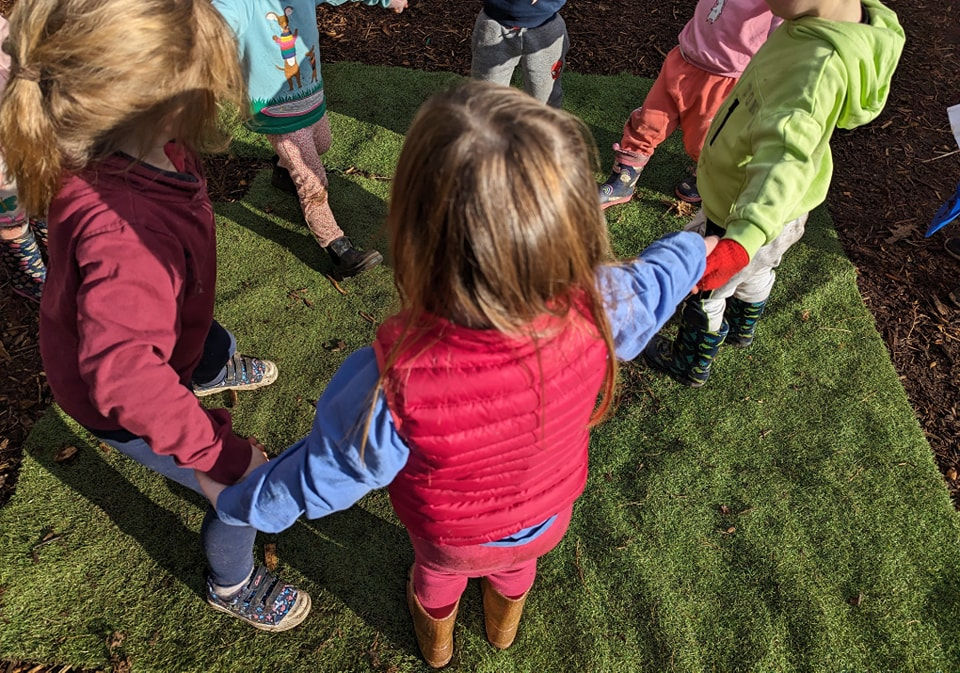
When we begin to see settling in through this lens, our priorities naturally begin to change. Rather than asking ourselves how quickly a child can become independent, we begin asking much richer questions.
What helps this child feel safe?
What are they trying to communicate through their behaviour?
Who do they naturally seek when they need reassurance?
What can I do today to strengthen our relationship?
These questions move us away from focusing on behaviour and instead encourage us to think about the emotional needs that sit beneath it. A child who clings to a parent is not simply being reluctant to separate. They may be asking for reassurance. A child who spends much of the session watching others before joining in is not necessarily lacking confidence. They may simply be taking time to understand the people, routines and expectations around them before feeling ready to participate.
Perhaps this is where the idea of belonging becomes so important.
Belonging is one of those words we hear regularly within Early Years, yet it is surprisingly difficult to define. It is not created by a welcome display or a colourful poster on the wall. It is created through countless small interactions that take place every single day. It develops when adults remember the things that matter to children, respond with empathy when they are finding things difficult and demonstrate a genuine interest in who they are as individuals.
Children begin to feel that they belong when they realise they are known.
When a practitioner remembers the name of their dog.
When they ask about a family celebration that happened at the weekend.
When they notice that the child has chosen the same favourite story for the third day running and happily sits beside them to read it again.
Individually, these moments may seem insignificant. Together, they communicate something incredibly powerful.
"You matter here."
Knowing What Matters
One experience has stayed with me over the years because it reminded me just how powerful it can be when we take the time to truly know a child.
I remember one little boy who spent much of his first week quietly standing near the book corner. He wasn't distressed, but neither was he joining in with the activities around him. It would have been easy to describe him as shy or assume that he simply needed more time to settle.
After spending some time talking with his mum, I discovered that his favourite place in the world wasn't indoors at all. He loved helping his grandad in the garden. They would spend hours together watering plants, digging in the soil and talking about what they were growing.
The following week, we introduced some gardening equipment into our outdoor area. Nothing elaborate—just watering cans, pots, compost and a few plants that needed looking after.
The transformation was remarkable.
He walked straight over, picked up a watering can and immediately became absorbed in what he was doing. Before long, another child wandered across to see what he was doing. Then another. Within minutes, he was chatting confidently, showing other children how to water the plants and proudly explaining what his grandad had taught him.
It wasn't the gardening equipment that helped him settle.
It was the fact that someone had taken the time to discover something that mattered to him.
That experience has stayed with me because it reminds me that children don't always need us to create something new or exciting. Often, they simply need us to create opportunities for them to bring a little piece of themselves into the setting.
It is easy to think that September is about helping children become familiar with a building. In reality, I believe it is about helping them become familiar with people. Buildings do not create emotional security. Relationships do.
When children know there is an adult who understands them, notices them and genuinely enjoys spending time with them, confidence begins to grow. Curiosity gradually replaces uncertainty. Exploration feels less daunting because children know there is someone nearby who will comfort, encourage and celebrate with them whenever they need it.
Perhaps that is why I have always believed that successful transitions are not measured by how quickly children stop crying, but by how successfully we help them feel that they belong.
Everything else grows from there.
An Early Insight
As practitioners, we often spend September preparing children for nursery. Perhaps our greatest responsibility is something much simpler than that. Perhaps it is preparing our nursery, preschool or childminding setting for every unique child who walks through the door.
When children leave those first few weeks believing, "The adults know me. They care about me. I belong here," then we have already laid the strongest possible foundation for everything that follows. Learning will come. Relationships must come first.
Looking for Practical September Planning?
If you're currently preparing to welcome new children into your setting, my September All About Me Complete EYFS Planning & Provision Toolkit has been created to help practitioners build meaningful relationships, celebrate every child's individuality and create a genuine sense of belonging throughout those important first weeks.
The toolkit includes four weeks of purposeful planning, continuous provision ideas, enhancements and engaging activities designed to help children share their interests, develop confidence and build positive relationships from the very beginning.
Explore the toolkit here:
Part of the Early Insights September Series: Building Belonging in the Early Years
This article is part of a series exploring how we can create positive transitions and meaningful beginnings for every child.
The complete series includes:
Helping Children Settle into Nursery: Why Belonging Comes Before Learning (You're reading this article.)
Understanding What Settling In Really Means
Why Relationships Are the Foundation of Successful Transitions
Working in Partnership with Families During September
Creating Environments That Communicate Belonging
Practical Ways to Help Children Settle
Seven Common Settling-In Mistakes Practitioners Make
Reflecting on September: What Have We Learnt About Our Children?
(Links to each article will be added as they are published.)


Comments