
Children Are Nature: Rethinking Our Relationship with the Living World


A few months ago, I watched a group of children become completely absorbed by a overgrown area in the garden.
To most adults, there was nothing particularly remarkable about this area. The weeds grew quietly in the corner of the garden, tucked behind a log pile that many people would probably have cleared away without a second thought. Yet for almost half an hour, these children returned to that same patch of ground again and again. They crouched carefully beside the leaves, searching for insects. They noticed tiny holes where something had been feeding.
No adult had planned the experience. There was no learning objective displayed, no carefully prepared activity and no expectation about what the children should discover.
There was simply curiosity.
Watching the scene unfold, I was reminded how often, as adults, we underestimate the power of the natural world. We invest time and thought into creating engaging activities, purchasing resources and designing environments that inspire children's learning, yet children continue to be captivated by the things we are most likely to overlook. A trail of ants crossing a pathway, a feather caught in long grass, a puddle reflecting the changing sky or a fallen branch after a storm can hold a child's attention for far longer than many of the carefully planned experiences we provide.
This has led me to consider something much bigger than how we design our outdoor spaces.
Perhaps one of the greatest challenges facing early childhood today is not simply that children are spending less time outdoors, important though that concern is. Perhaps the deeper issue is that we have gradually come to view children and nature as separate from one another.
We often hear practitioners speak about taking children into nature, encouraging children to connect with nature or creating opportunities for children to learn about the natural world. These phrases are positive and well-intentioned, but they contain an assumption that is worth questioning: that nature exists somewhere beyond children's everyday experience, as something we visit rather than something we belong to.
But what if that assumption is wrong?
What if children are not visitors to nature at all?
What if children are nature?
At first, this idea may seem philosophical, perhaps even abstract. Yet the more we reflect on it, the more natural it becomes. Human beings have evolved through a close relationship with the living world. For thousands of generations, our survival depended on our ability to observe, explore, adapt and understand the environments around us. The curiosity we see in young children today is not something adults have created; it is part of who we are.

A child's desire to climb, collect, build, dig, investigate, observe and experiment is not simply a collection of activities that happen to work well outdoors. These behaviours reflect deep human instincts. Children are naturally drawn towards movement, discovery and exploration because these experiences have always been central to how human beings learn about the world.
For most of human history, childhood unfolded within nature rather than alongside it. The changing seasons shaped daily life. Weather influenced what people did and how they lived. Plants, animals, soil and water were not subjects to be introduced through planned activities; they were part of everyday experience.
Children learnt because they were immersed in the world around them.
They climbed because trees were there.
They built because branches and stones were available.
They observed because the natural world was constantly changing.
There was no separation between learning and living.
Only relatively recently have we begun to create distance between childhood and the natural environments that shaped it.
Today, many children grow up within carefully designed indoor spaces, structured routines and increasingly managed environments. Even outdoor areas, often created with great care and positive intentions, can become places where every element has a fixed purpose. We have spaces for climbing, spaces for digging, spaces for movement and spaces for quiet reflection. While these environments can offer many valuable opportunities, they can sometimes reduce the uncertainty and unpredictability that make nature so compelling.
Nature does something that manufactured resources cannot.
It changes.
A climbing frame is designed to remain largely the same each day. A tree is never exactly the same twice. It changes with the seasons, responds to the weather, provides shelter for insects and birds, loses leaves, grows new shoots and invites different questions each time a child returns.
A puddle appears and disappears.
A flower blooms and fades.
A log begins to decay and becomes home to new life.
A seed remains hidden beneath the soil before eventually revealing itself.
Nature is not simply a place where learning happens. Nature is a living, changing relationship.
Perhaps this is why children are so naturally attracted towards it. They are drawn to environments that surprise them. Their curiosity responds to uncertainty, change and possibility.
A child looking beneath a stone is not simply searching for a creature. They are asking questions about what exists beyond what they can immediately see. A child watching rainwater move through the garden is not simply observing water; they are developing theories about movement, cause and effect. A child collecting fallen leaves is not simply gathering objects; they are beginning to recognise patterns, differences and connections.
The learning is there, but it begins with fascination.
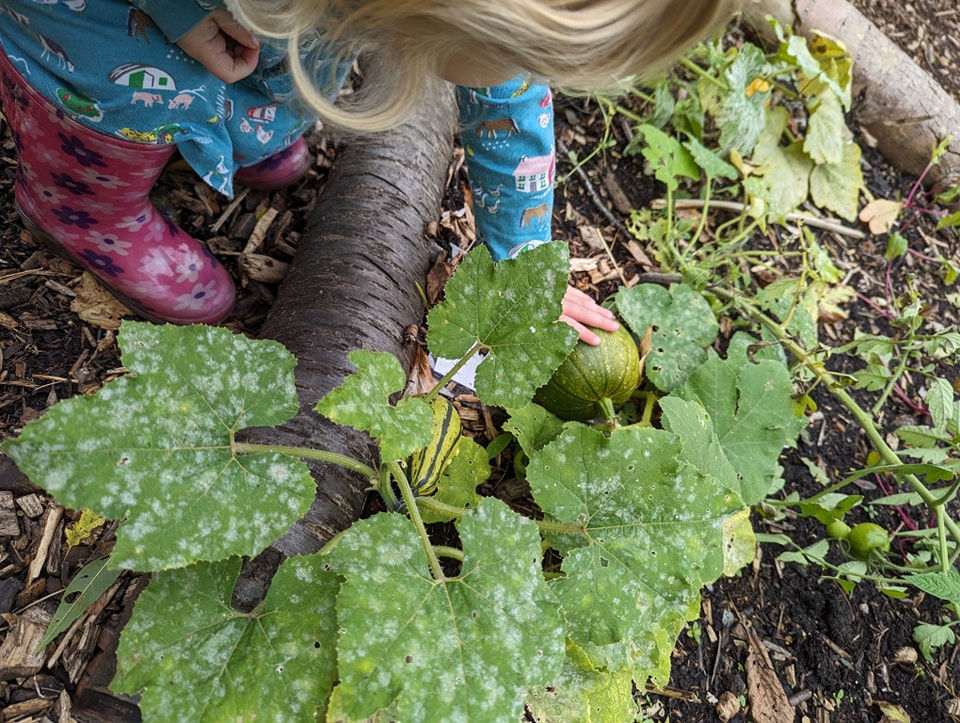
This is an important point because, as early years professionals, we are often understandably focused on learning outcomes. We think carefully about what children might develop, what knowledge they might gain and what skills they might practise. These considerations matter. However, when we become too focused on the outcome, we can sometimes overlook the experience that creates the foundation for meaningful learning in the first place.
Wonder comes before understanding.
Children rarely develop a deep relationship with the world because someone explained why it matters.
They develop that relationship because they experienced something that mattered to them.
The marine biologist and writer Rachel Carson understood this beautifully in her book The Sense of Wonder. She argued that children need opportunities to experience joy, curiosity and awe before they can truly understand the natural world. Knowledge has value, but knowledge without connection can remain distant. A child who feels wonder when discovering a small creature beneath a log, watching waves move across a shoreline or noticing the first signs of spring is developing something deeper than information.
They are developing belonging.
This idea has become increasingly important within research into nature connectedness. Researchers exploring children's relationships with the natural world suggest that meaningful connection is not simply about spending time outside. It is about developing a sense of relationship with the living world and recognising that we are part of something larger than ourselves.
This distinction matters.
A child can spend time outdoors without necessarily developing a connection with nature. An outdoor space dominated by fixed equipment may provide opportunities for physical development, but it may not always encourage children to notice the robin collecting nesting material, the mushrooms growing through decaying wood or the tiny insects living beneath a stone.
Connection begins with attention.
Attention begins with noticing.
And noticing requires time.
I am reminded of a nursery visit several months ago when a practitioner apologised that there was "nothing planned" for the outdoor session because heavy rain had disrupted their original intentions. When we stepped outside, a group of children had already discovered that water was flowing from a broken section of guttering into a collection of increasingly large puddles.
For the next forty-five minutes, they became engineers, problem-solvers and collaborators.
They moved logs and stones. They collected containers. They experimented with different ways to redirect the water. They disagreed, negotiated and changed their ideas when something did not work. Adults supported when needed, but the thinking belonged entirely to the children.
Later, the practitioner reflected on the experience and said, "If I had planned that activity, it would never have been as good."
I have often thought about that comment because it captures something important about nature.
Nature does not follow our plans.
It presents children with problems that have not been designed in advance, changes that cannot be predicted and discoveries that cannot be scheduled. It creates opportunities for children to think, adapt and explore because the world itself becomes part of the learning process.
Perhaps children already understand this.
Perhaps adults are the ones who have forgotten.

When Did We Begin Seeing Ourselves as Separate from Nature?
If the idea that children are nature rather than visitors to nature feels unfamiliar, perhaps this is because it reflects a much wider change in society's relationship with the living world.
For thousands of years, human beings lived with a close awareness of seasons, landscapes and natural rhythms. People understood the arrival of birds, the signs of changing weather and the patterns of growth and decay because these things were woven into daily life.
Children were part of those rhythms.
They learnt through participation.
They learnt through observation.
They learnt through being involved.
Today, our relationship with nature often looks different. Many children encounter the natural world through planned experiences rather than everyday involvement. A woodland visit becomes an event. Growing vegetables becomes a project. Looking for insects becomes an activity.
These experiences are valuable, but they can unintentionally reinforce the idea that nature is something separate from ordinary childhood.
Children themselves do not seem to experience this separation.
Given the opportunity, they instinctively stop to watch insects moving through grass, collect interesting stones, investigate muddy areas and return repeatedly to the same places to see what has changed. Their curiosity does not require permission.
It simply appears.
Perhaps the question we need to ask is not how we teach children to connect with nature.
Perhaps it is whether our environments allow them to continue the connection they already have.

What Happens When Childhood Loses Its Relationship with the Living World?
If children are naturally drawn towards the living world, it is worth considering what happens when opportunities for that relationship become increasingly limited.
This is not an argument that childhood was somehow better in the past, nor is it a suggestion that children should return to an imagined version of history where every day was spent outdoors.
Modern childhood has many advantages, and developments in technology, healthcare, education and society have brought enormous benefits for children and families.
However, alongside these changes, there has been a gradual shift in how children experience the world around them.
For many children today, nature has become something they encounter occasionally rather than something they participate in every day.
A walk through woodland becomes a special trip.
A muddy experience becomes a planned activity.
A visit to a farm becomes an annual event.
A fascination with insects becomes a theme for investigation.
There is nothing wrong with these experiences. They can be rich, meaningful and memorable. The question is whether occasional encounters are enough, or whether children need something deeper: a relationship with the natural world that is woven into the ordinary fabric of childhood.
The writer Richard Louv highlighted this growing distance between children and nature in his influential book Last Child in the Woods, introducing the phrase "nature-deficit disorder" to describe the possible consequences of children having fewer opportunities for direct experiences with the natural world. While this is not a medical diagnosis, Louv's work encouraged an important conversation about the impact of modern lifestyles, increased screen use, urbanisation and reduced access to natural environments.
The importance of his message was not that technology is harmful or that childhood should somehow return to the past. Rather, it was that something significant happens when children develop meaningful relationships with the natural world.
And something important can be lost when those relationships become harder to form.
Children need experiences that involve their whole selves.
They need to feel the weight of a log as they carry it across the garden.
They need to notice the difference between dry earth and soil after rainfall.
They need to experience the uncertainty of balancing on a branch that moves slightly beneath their feet.
They need moments where they are not simply receiving information about the world but actively participating within it.
This matters because so much of childhood today takes place within environments designed around predictability. Adults quite rightly have a responsibility to keep children safe, but a completely predictable environment can sometimes remove the opportunities through which children develop confidence, resilience and problem-solving skills.
Nature offers what could be described as manageable uncertainty.
A stick may break.
A tower of stones may collapse.
A puddle may be deeper than expected.
A seed planted today may not appear for many weeks.

These experiences invite children to adapt, reconsider and try again. They help children understand that the world does not always respond immediately or predictably, and that challenges can be approached with curiosity.
The natural world becomes a place where children learn that uncertainty is not
something to fear but something to explore.
This is one reason nature-based play can be so powerful. The environment itself becomes a partner in children's thinking.
A tree can become a den, a hiding place, a climbing challenge or a quiet place to sit.
A collection of stones can become treasure, counting objects, ingredients or part of an imaginary landscape.
A patch of mud can become almost anything a child's imagination requires.
Unlike many manufactured resources, nature does not tell children what it is for.
It invites possibility.
This matters because childhood is not only about gaining knowledge. It is about developing a relationship with the world.
A child who watches a particular tree change throughout the year does not simply learn that trees lose their leaves in autumn. They begin to understand change, patience and the rhythms of living things.
A child who cares for plants does not simply learn that plants need water. They begin to understand responsibility, dependence and the impact of their actions.
A child who regularly notices the small creatures sharing their outdoor environment does not simply learn facts about insects. They begin to recognise that the world is full of relationships.
This is where nature connection becomes more than an educational approach.
It becomes a way of seeing.
Beyond Outdoor Learning: Towards Belonging
The phrase "outdoor learning" is now widely used within early years education, and rightly so. Outdoor environments offer extraordinary opportunities for children's physical, emotional, social and cognitive development.
However, I wonder whether the phrase itself sometimes limits our thinking.
It suggests that outdoors is simply another place where learning happens.
The indoor environment supports learning.
The classroom supports learning.
The outdoor environment supports learning.
But perhaps nature offers something beyond another learning environment.
Perhaps it offers belonging.
The environmental writer and philosopher David Abram has written about the importance of recognising our relationship with the more-than-human world: the understanding that humans are not separate observers of nature, but participants within a much larger living system.
This idea feels especially important in early childhood.
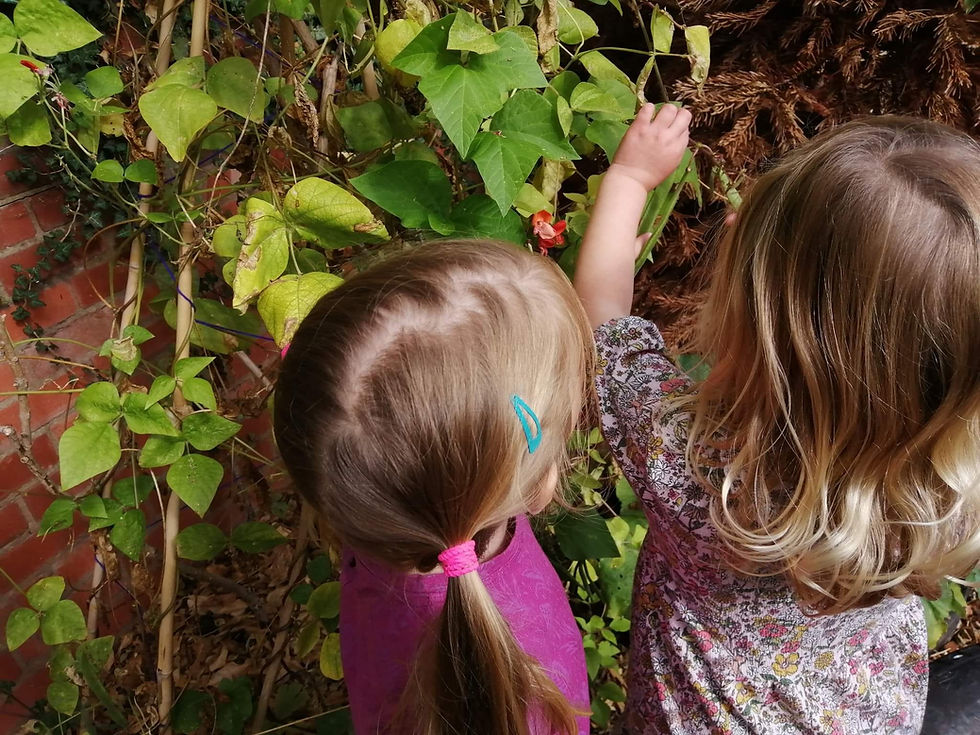
Young children do not naturally experience themselves as separate from the world around them. They talk to animals, develop relationships with particular trees, collect natural objects and create stories about the things they discover. Their play often reflects a sense of connection that many adults have gradually learned to overlook.
A child does not look at a puddle and see only dirty water. They see reflections, movement, possibility and imagination.
A child does not see a fallen branch as garden waste. They see a bridge, a tool, a creature's home or the beginning of an adventure.
Perhaps children are not learning how to connect with nature.
Perhaps they arrive already connected.
Our role is not to create that relationship from nothing.
Our role is to protect it.
This changes the questions we ask about outdoor provision. Instead of asking:
"What activities can we provide outside?"Perhaps we could ask: "What relationships can children develop here?"
Can children return to the same tree throughout the seasons and notice how it changes?
Can they recognise the birds and insects that share their environment?
Can they care for living things?
Can they develop a sense that this place belongs to them and that they belong within it?
These questions move us beyond thinking about outdoor spaces as resources and towards thinking about them as living ecosystems.
A child's relationship with nature does not begin with a lesson about conservation.
It begins with affection.
We care for what we know.
We protect what we value.
And value begins with relationship.

What Does This Mean for Early Years Practice?
If we accept that children are not separate from nature, then perhaps our approach to outdoor provision needs to shift.
This does not mean every setting needs acres of woodland, a forest school site or a complete redesign of its outdoor environment. It does not mean removing all manufactured resources or abandoning thoughtful planning.
Quality provision has always involved intentional decisions. The change is more subtle.
It is about moving away from seeing nature as something we add to children's experiences and towards recognising it as something we build relationships with.
A nursery garden does not need to be perfect. In fact, perhaps perfection is sometimes the very thing that prevents deeper connection.
A perfectly tidy outdoor space may appear attractive to adults, but a living environment is rarely tidy. Leaves fall. Plants spread. Soil changes. Insects arrive. Weather leaves its mark.
These are not problems to remove.
They are invitations to explore.
A garden that changes is a garden that teaches.
Some of the most valuable areas in an outdoor environment are often the places adults might overlook: the corner where grass grows longer, the log beginning to decay, the patch of soil where insects gather, the puddle that appears after rain.
These spaces communicate something powerful to children. They say: "There is something here to discover."
Creating opportunities for nature connection can begin with simple changes. Natural materials available every day. Spaces where children can observe living things without waiting for an adult-led activity. Plants that children can care for over time. Logs, stones and branches that can be moved, investigated and transformed through imagination.
Most importantly, it requires time. Nature connection cannot be rushed.
A child discovering a snail needs time to watch it move.
A child planting a seed needs time to see what happens next.
A child returning to the same place throughout the year needs time to notice change.

This can be challenging within modern early years practice, where there are many demands on practitioners and where planning, assessment and routines are important parts of our work.
Yet nature reminds us that some of the most valuable learning cannot be hurried.
A caterpillar does not transform because the timetable says it should.
A flower does not bloom because it fits within the weekly plan.
A bird does not arrive because we have prepared a learning opportunity about migration.
The natural world invites children into a different relationship with time.
A relationship based on patience, observation and anticipation.
This also changes how we observe children's learning outdoors. Sometimes the richest learning is not immediately visible.
A child collecting stones repeatedly may not simply be "playing with rocks". They may be developing classification skills, creating patterns, building stories or developing a sense of place.
A child sitting quietly beneath a tree may not appear actively engaged. They may be regulating emotions, observing changes or processing experiences.
If we only search for obvious outcomes, we risk missing the quieter forms of learning that nature encourages.
Perhaps our role is not always to direct children's attention towards nature. Perhaps sometimes it is to notice where their attention naturally goes.
What do they return to?
What captures their curiosity?
What do they investigate without adult suggestion?
These moments reveal how children make sense of the world.
They remind us that children are already researchers. They form theories, test ideas, ask questions and revise their understanding.
Nature provides the perfect context for this because it offers endless possibilities without predetermined answers.
A puddle does not have one correct interpretation.
A stick does not have one correct purpose.
A seed does not reveal its story immediately.
Nature allows children to be thinkers, explorers and creators.

Remembering What Childhood Already Knows
Perhaps the greatest challenge is not teaching children to reconnect with nature, but recognising that they already possess an instinctive relationship with the living world. When we observe young children outdoors, we often see something remarkable: they are naturally drawn towards the things around them. They notice small changes that adults may overlook, pause to investigate things we might hurry past, collect objects that appear insignificant and ask questions that reveal a deep curiosity about how the world works.
Children do not need to be persuaded that nature matters. They do not need to be convinced that the natural world is worthy of their attention. What they need are opportunities to experience it, to spend enough time within it that their curiosity can develop into familiarity, affection and understanding.
Before children learn about ecosystems, they need opportunities to experience the excitement of discovering a worm emerging after rainfall, to observe the creatures that share their environment and to begin forming relationships with the living things they encounter. Before they learn about biodiversity, they need time to develop an appreciation for the variety of life around them and to recognise that even the smallest creatures have a place within the wider world. Before they learn about sustainability, they need to develop a sense that the natural world is not something separate from them, but somewhere they belong.
Knowledge matters, but connection provides the foundation upon which knowledge grows.
When we consider the future of our planet, conversations often focus on what children need to learn about environmental awareness, sustainability and responsibility. These conversations are important, and children certainly need opportunities to develop understanding about the challenges facing the natural world. However, perhaps the foundation of all environmental care begins with something much simpler: a relationship built through familiarity, affection and meaningful experience.
Children are more likely to care for the world when they feel connected to it. That connection develops through repeated encounters with the places around them; through knowing the tree that changes first when autumn arrives, recognising the birds that return to the garden each year, remembering where the best puddles form after heavy rain and discovering that even the smallest corners of the environment can hold extraordinary stories.
This is why outdoor provision matters so deeply within early childhood. It is not because being outdoors is automatically better than being indoors, nor because nature should simply be viewed as another resource to support curriculum goals. Outdoor environments matter because childhood itself has always been shaped by a relationship with the living world, and because children need opportunities to maintain and strengthen that relationship as they grow.
Perhaps we have not lost children's connection with nature. Perhaps we have simply created environments where that connection has fewer opportunities to flourish. The challenge for early years settings is not to manufacture wonder, because wonder already exists within children. Instead, our role is to create the conditions where children can follow their curiosity, develop meaningful relationships with the world around them and discover the sense of belonging that comes from understanding their place within it.
So the next time a child stops to examine something small on the ground, pauses to watch the movement of leaves in the wind or spends ten minutes fascinated by an insect that many adults would overlook, perhaps we should resist the temptation to hurry them towards something we have planned. In that moment, they are not being distracted from learning; they are experiencing one of the most important processes of childhood. They are observing, wondering, questioning and building a relationship with the world around them.
They are discovering their place within the living world and reconnecting with something that, perhaps, human beings have always known.
They are nature.


Comments